From National Identities to Planetary Citizenship
Connecting students across borders through shared global challenges — Students from India, Pakistan and Zimbabwe entered a Globe From Home Planetary Citizenship program, divided by borders — and emerged…
In an increasingly interconnected world, many of the challenges we face — from climate change to inequality — do not recognise national borders. Yet education systems often remain rooted in national perspectives, shaping how young people see themselves and their place in the world.
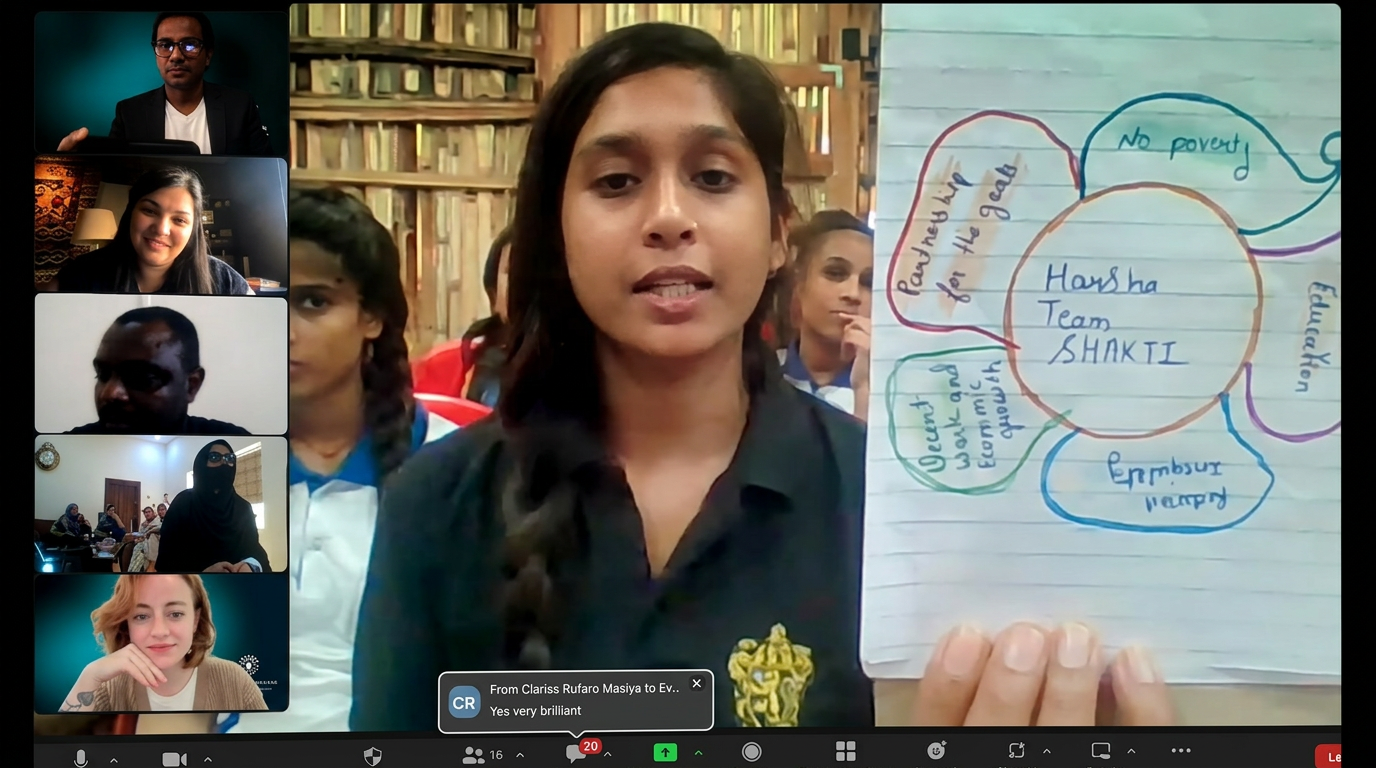
In this powerful Globe From Home session, students from India, Pakistan, and Zimbabwe came together in a shared learning experience designed to explore a fundamental question: what does it mean to move from national identity to planetary citizenship?
Delivered live across classrooms in different countries, the session created a rare and meaningful space for students to engage not only with global issues, but with one another — across geographies, cultures, and lived experiences.
At the beginning of the session, students entered as representatives of their own countries, shaped by distinct histories, perspectives, and contexts. Through guided discussion and shared exploration, they began to reflect on how national identity influences the way we understand the world — including how we perceive challenges such as climate change, development, and justice.
As the session progressed, the focus shifted from difference to connection.
Students explored how global challenges are experienced differently in each context, yet are fundamentally interconnected. A student in India speaking about air pollution, a student in Pakistan reflecting on water stress, and a student in Zimbabwe discussing agricultural change all contributed to a growing realisation: these are not isolated issues, but shared realities shaped by global systems.
What made the session particularly powerful was the human dimension. Rather than learning about each other through data or case studies, students encountered real voices, real perspectives, and real stories. This direct interaction fostered empathy, curiosity, and a deeper understanding of how others experience the world.
Gradually, a shift began to take place.
Students moved beyond seeing themselves solely through the lens of nationality and began to recognise their role as part of a broader, interconnected global community. They started to see that while their local realities may differ, their futures are deeply linked.
This is the essence of planetary citizenship.
It is not about replacing national identity, but expanding it — developing the ability to think beyond borders, understand interconnected systems, and act with a sense of shared responsibility for the planet.
By the end of the session, students had not only gained insight into global challenges, but had experienced what it means to collaborate across borders. They saw how dialogue, understanding, and collective thinking can lead to more inclusive and effective approaches to solving complex problems.
This session reflects Globe From Home's broader vision of education: one that connects learners directly to each other and to the real-world systems shaping their lives. It demonstrates how learning can move beyond content delivery to become a platform for building global awareness, empathy, and action.
As the world becomes more interconnected, the ability to think and act as planetary citizens will become increasingly essential. Experiences like this help lay the foundation — not just for understanding the world, but for shaping its future.